Pro-Putin film director Nikita Mikhalkov declined to address the substance of an open letter from independent filmmaker Alexander Sokurov, who had appealed to him to help bring an end to film censorship in Russia. Still, the exchange itself reflects the growing tensions within Russia’s cinematic sphere. More and more films are being shelved without ever reaching theaters, while the list of reasons for banning them continues to expand. Even pro-Kremlin cultural conservatives are pleading with the authorities to establish clear “rules of the game” and adopt legislation introducing what they call “civilized censorship.” Meanwhile, crude pro-war Z-movies are losing money, audiences are flocking to fairy tales and remakes depicting peaceful life, and the industry is plagued by nepotism, cronyism, and recklessly incompetent management.
What is banned
On June 14, independent Russian film director Alexander Sokurov marked his 75th birthday by publishing an open letter to pro-Putin colleague Nikita Mikhalkov, once again raising the issue of censorship in contemporary Russian society. Sokurov argued that the Kremlin’s restrictions had deprived him and others of “the opportunity for professional development.” Sokurov urged Mikhalkov to “review the list of films banned by the Ministry of Culture from being screened in the country” — currently 37 titles — and help fellow filmmakers “lift these bans and restore the constitutional rights of our talented compatriots.”
Mikhalkov, who has served as chairman of the Board of the Russian Filmmakers' Union since 1998, responded by seizing on Sokurov's description of him as “one of the leaders of the Russian state,” retorting: “I have never been, am not, and never will be.” He then suggested that Sokurov “redirect this letter to someone who actually runs the state,” effectively leaving Sokurov's appeal unanswered and refusing to take any responsibility for the censorship that prevails in Russia.
The list of banned films cited by Sokurov has been circulating online for quite some time. In addition to Sokurov's own works, it includes films by some of the most prominent directors in contemporary Russian cinema: Ilya Khrzhanovsky (several films from the DAU cycle, which premiered at the Berlin International Film Festival), Natasha Merkulova and Aleksei Chupov (Captain Volkonogov Escaped, which premiered at the Venice International Film Festival), Vladimir Munkuyev (Nuuccha), Stepan Burnashev (Aita), Natalia Meshchaninova (the television series Alice Can't Wait, plus One Small Night Secret, which premiered at the Rotterdam International Film Festival), Alexander Molochnikov (Monastery, a television series), Klim Shipenko (December), Viktor Ginzburg (Empire V), Rezo Gigineishvili (Patient No. 1, which premiered at the Tallinn Black Nights Film Festival), Semyon Serzin (Ryzhy), and Yury Bykov (The Owner, which premiered at the Geneva International Film Festival).
The Insider has previously written about the issue in detail, but since then, not only has Alexander Sokurov's letter appeared online, so has the website Shelved Cinema, which now lists 66 banned films, most of them feature productions. Left out of that tally, however, is a vast number of documentary films that have never been cataloged.
On May 27, two guilds within the Russian Filmmakers' Union — the Guild of Film Scholars and Critics and the Guild of Producers and Film Industry Organizers — held a roundtable discussion titled “Independent Russian Cinema: The Problem of Censorship and Self-Censorship.”
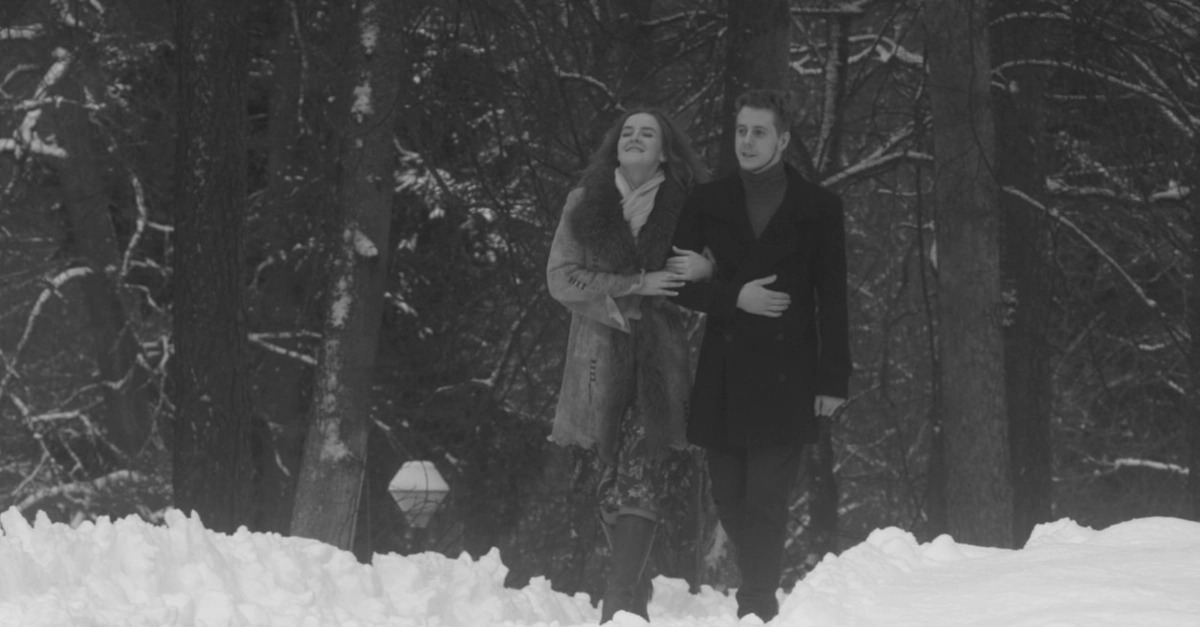
The immediate trigger for the event was the Ministry of Culture's decision to remove the anthology film Love in Winter from the program of the Mirror International Film Festival in Ivanovo, held in June. One of the film’s directors was the well-known film critic Sergey Kudryavtsev, author of 5,000 Films: Reviews Over 50 Years.
At its core, Love in Winter is an ordinary love story containing erotic scenes, and according to Kudryavtsev, no one ever explained the official reason for banning it. On social media, he wrote: “Apparently, we encroached on traditional moral values. But how is the country supposed to improve its demographic situation if even heterosexual romantic relationships are now banned from the screen?”
Participants in the roundtable at the Russian Filmmakers' Union decided to establish a Screen Commission — apparently modeled on the Conflict Commission of the Soviet Filmmakers' Union, which during the Gorbachev years dealt with the backlog of films that had been banned and shelved under Leonid Brezhnev. The new body was expected to take up the issue of newly banned films; however, after announcing the roundtable, the union's website never mentioned it again, while the plenary session itself, according to a report published on the same site, instead established a Commission on Film Education and Media Pedagogy.
The grounds for banning films in Russia are expanding ever more rapidly. On July 31, 2025, a law came into force that, in addition to other draconian measures, prohibits the distribution of films containing material deemed to discredit Russia's traditional spiritual and moral values, the definition of which remains extremely vague. The determination is left to the discretion of the public — though in practice, that means the people whom the state appoints to represent “the public.”
Producer and director Alexander Voytinsky acknowledged in an interview on RBC TV that the film industry maintains “blacklists” of actors and directors rejected by the authorities. That interview, however, was soon removed from RBC's website.
The creative community has long been calling on the state to establish clear rules of the game based on codified legal principles, but that demand has yet to receive a clear response. A 2025 proposal from presidential special representative for international cultural cooperation Mikhail Shvydkoy to create a “civilized” censorship system modeled on the Soviet one has gone nowhere (Shvydkoy himself noted that establishing such an institution would require substantial funding). Meanwhile, in an interview with Expert magazine, presidential aide and former Russian culture minister (and Ukraine peace talk delegation leader) Vladimir Medinsky argued that Russia's film industry needs stronger state oversight when it comes to the quality of the films it produces.
“What we have,” he said, “is a heap of mediocre film product,” adding that “control should exist at every stage: the idea, the screenplay, the filming, and the release.” In Medinsky's view, this was how the Soviet film industry functioned: censorship “undoubtedly had artistic value” because “shoddy work was not allowed into distribution.”
Pro-war cinema continues to flop
The purpose of the censorship now being imposed is not so much to improve the artistic quality of films as to maximize the propaganda value of the money invested in the film industry. Movies produced with that goal in mind fail to attract audiences to theaters and generate little meaningful box-office income, and if television channels or streaming platforms acquire such content at all, it is usually bundled together with similar films and series that are increasingly filling Russia's media landscape.
In an interview with TASS on the sidelines of the St. Petersburg International Economic Forum, current Russian Culture Minister Olga Lyubimova said that the box-office revenue for Russian films in the first five months of 2026 had been 23.7 billion rubles. She did not mention, however, that after Hollywood films disappeared from the Russian market in 2022, the industry's revenues fell by one-third, and as many as 40% of movie theaters were forced to suspend operations. Nor did she note that only five of the 50 feature films produced last year with state financial support managed to recoup their production costs at the box office.
Only 5 of the 50 feature films produced in Russia with state support recouped their production costs at the box office
The minister takes particular pride in films about the so-called “special military operation” (SVO). According to Lyubimova, however, there is no quota for such productions: “Our task is to support every worthy screenplay devoted to the special military operation and our heroes, the boys on the front line.”
However, according to other estimates, last year the Ministry of Culture and the Cinema Fund backed only 12 films about the war, most of them documentaries. Yet even those failed to achieve any meaningful success at the box office. The quality of the remaining projects was apparently considered too poor even by the standards of the officials overseeing the film industry.
The most prominent of these films, The Kid, starring Gleb Kalyuzhny, tells the story of an apolitical rapper from Donetsk who volunteers to “liberate” Mariupol in order to rescue his mother from the besieged. During the project’s 13-week theatrical run on 234 screens, it grossed just over 43 million rubles, meaning upwards of only 120,000 people saw it in theaters. Its production budget is not publicly known, but is estimated at no less than 180 million rubles. Since cinemas typically retain around half of box-office revenue, the producers ultimately recovered only around 12% of the production budget.
The melodrama Call Sign “Passenger,” based on a screenplay by Alexander Prokhanov and starring Anton Shagin, performed only slightly better. Here too, the protagonist is an apolitical young man — a writer and carefree Moscow bon vivant — who travels to the Donbas after learning that his brother has gone missing there. Over a nine-week run on more than 2,000 screens, it grossed 57.5 million rubles, corresponding to roughly 150,000 admissions and a cost-recovery rate of about 16% (though as in the previous case, that figure does not include advertising expenses).
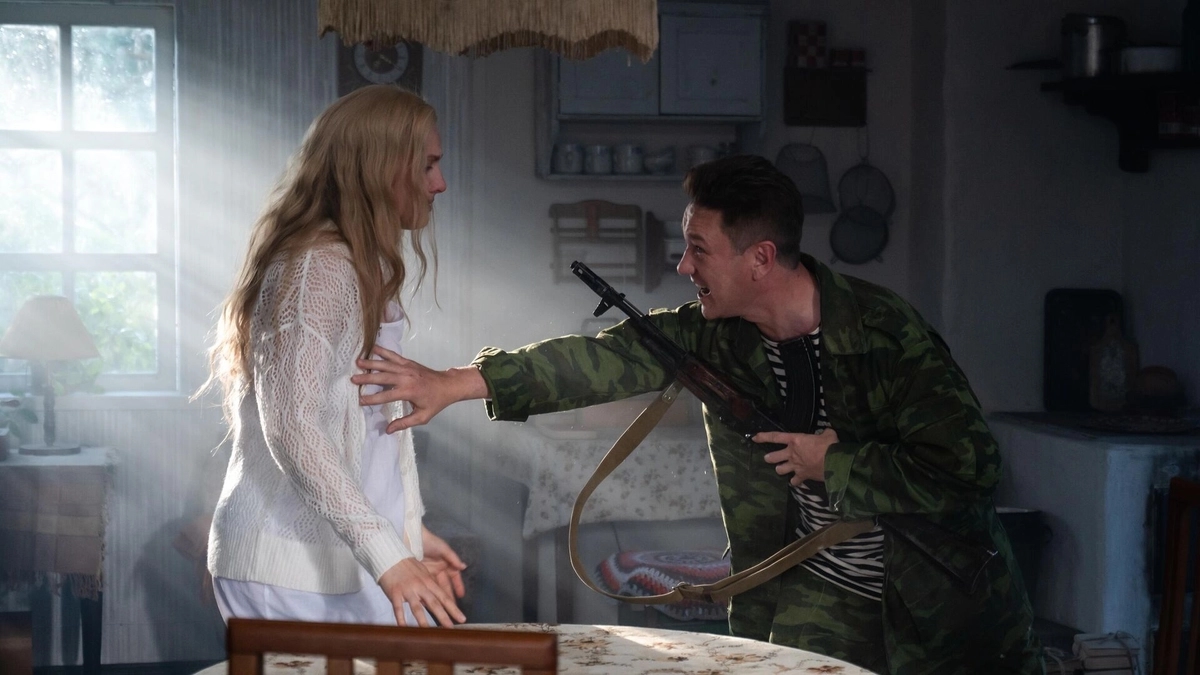
The second major priority of the Russian state’s thematic funding policy remains the Great Patriotic War, particularly as it relates (at least in the contents of screenplays) to the “special military operation.” These historical films tend to attract more attention, perhaps because they tend to be based on literary works that have remained popular since the Soviet era. Among them are Not Listed, adapted from Boris Vasilyev's novel, a heroic drama about the defenders of the Brest Fortress, and August, based on Vladimir Bogomolov's novel In August 1944, a psychological wartime thriller with Sergei Bezrukov in the lead role.
Public attention, however, does not necessarily translate into commercial success. Not Listed, starring Vladimir Mashkov, opened last year's Moscow International Film Festival, but despite a production budget of one billion rubles, it earned only about one-third of that amount at the box office, attracting an audience of approximately 1.5 million.
August, starring Bezrukov, performed better. Its box-office receipts exceeded one billion rubles, covering more than half of its production budget while drawing 2.3 million moviegoers. Although it is impossible to compare box office performance in the digital age with ticket sales from the Soviet era, Sergei Bondarchuk's They Fought for Their Country (1975) sold 40.6 million tickets, Vladimir Rogovoy's Officers (1971) drew 53.3 million viewers, and Stanislav Rostotsky's The Dawns Are Quiet Here (1972) reached an audience of 66 million.
Audiences prefer fairy tales
Today's moviegoers consistently show a preference for films centered on peaceful, non-political themes. Last year's biggest box-office hits included The Wizard of the Emerald City, Daddy's Daughters, and Finist: The First Bogatyr. The leaders of the first half of this year are Cheburashka 2, Prostokvashino, and Pinocchio. Each of these projects has earned between four and five billion rubles at the box office, corresponding to roughly 11-13 million admissions — a very strong result by today's standards.
It is easy to see that nearly all of these films are based on Soviet or post-Soviet franchises, the only genuine exception being The Prophet: The Story of Alexander Pushkin, starring Yura Borisov. The film is bold, fast-paced, and distinctly Hollywood-inspired in its emphasis on spectacle.
Even here, however, the Soviet experience — so often invoked by today's cultural officials — poses an awkward comparison. The opinion leaders of the 1970s and 1980s, as reflected in the annual readers' poll conducted by Sovetsky Ekran magazine, selected films such as The Red Snowball Tree, White Bim Black Ear, Office Romance, Moscow Does Not Believe in Tears, You Never Even Dreamed, A Cruel Romance, and The Messenger as the best films of their respective years. These were not only commercial successes, they also introduced new ideas and artistic visions. The classics created by Vasily Shukshin, Eldar Ryazanov, Vladimir Menshov, and Karen Shakhnazarov had no obvious predecessors to imitate, and it is no coincidence that in the post-Soviet era they have inspired remakes, parodies, and countless references in popular culture. That trend naturally irritates many viewers, who conclude that today's artistic also-rans have little of their own to offer (and not without reason).
The Russian authorities are redirecting funding toward officially approved themes and favored names while depriving filmmakers such as Alexander Sokurov, Boris Khlebnikov, and Natalia Meshchaninova the opportunity to work, effectively subjecting them to a professional ban.
Paradoxically, however, films of genuine artistic ambition continue to emerge. Sometimes private investors step in to finance artistically ambitious projects, resulting in films like Sergey Chliyants's The Wind, which Russia's two most prestigious film awards — the Nika and the White Elephant — both named the best film of last year. At other times, the Ministry of Culture provides funding on a residual basis for a biographical film about a great Russian poet, as in the case of Bakur Bakuradze's Lermontov, in which the brooding genius is portrayed by stand-up comedian Ilya Ozolin as a man for whom “life is tedious and dreary, and there is no one to offer a hand in a moment of spiritual distress.”
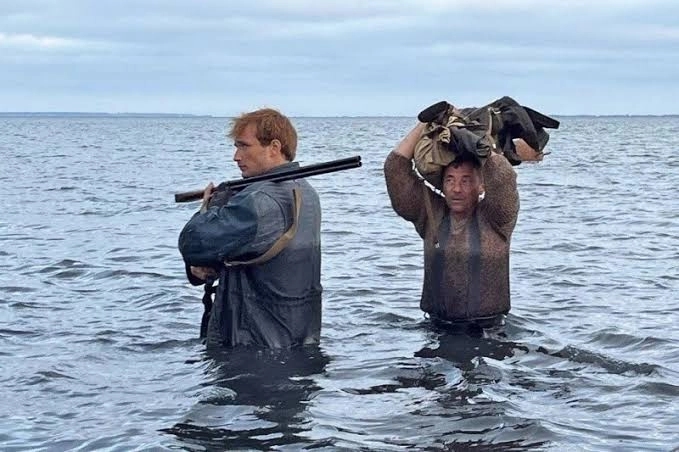
Low budgets, combined with the affordability of modern filmmaking equipment, have become the saving grace of contemporary Russian auteur cinema. Most audiences, both in Russia and abroad, know little about it, but artistically sophisticated films that grapple honestly with reality continue to be made — and some even manage to overcome the barrier of state distribution certificates.
According to the experts behind the White Elephant Award, the most notable examples include Eternal Winter (directed by N. Larionov), Yura Was Here (S. Malkin), Vacation (A. Kuznetsova), Portraits of Friendly Relations (S. Raizman), Dad Died on Saturday (Z. Abdrakhmanova), Fireworks in Broad Daylight (N. Volova), and A Blank Page (P. Kondratyeva).
In the auteur segment, Russian cinema has long existed as the country's counterpart to European art-house filmmaking — modest in scale, but marked by confidence, artistic integrity, and (at times) even remarkable moral courage. It has also embraced equality: the majority of the directors on the above list are women. The same cannot be said of the visible, official part of the cinematic iceberg, which continues to be shaped by an enduring nostalgia for the grand Soviet style so fervently championed by Vladimir Medinsky and Nikita Mikhalkov.
The dire state of Russia's theatrical film market
Speaking before the State Duma on June 17, Nikita Mikhalkov reminded lawmakers that a year earlier he had appealed to Vladimir Putin “with a proposal to introduce quotas on American films.” He suggested imposing “an entry fee of five million rubles for any film submitted for release in Russia.” The proposal was immediately endorsed by another leading media executive, Channel One CEO Konstantin Ernst, who said the money “would support Russian cinema — it's the right idea.”
The problem, however, is where to find enough American films to make such a scheme meaningful. Hollywood imposed sanctions on the Russian media market in 2022 in protest against Russia's invasion of Ukraine, and of the 50 films listed in Russia’s theatrical release schedule for June, only seven were American — mostly from small independent studios rather than the major Hollywood companies.
The rest of the lineup included films from countries considered friendly to Russia, such as India, China, and Kyrgyzstan (whose distributors are unlikely to be willing to pay five million rubles for access to the Russian market). More importantly, even under the current policy of giving priority to domestic productions, the Russian film industry has the capacity to supply, at best, only about 30% of the repertoire needed by theaters.
That, incidentally, is the same figure cited by Culture Minister Lyubimova, who boasts that Russia has succeeded in reclaiming that share of the domestic market from foreign films. In reality, however, theaters have long been patching holes in their schedules, partly compensating for the absence of new Hollywood releases by reissuing classic international films. In June, these included Jean-Luc Godard's Pierrot le Fou, Federico Fellini's 8½, and Quentin Tarantino's Kill Bill. Meanwhile, three of the 15 Russian titles in theaters were not films at all but stage productions by Valery Gergiev, Andrei Konchalovsky, and Yegor Peregudov that had been adapted for the screen.
The theatrical market has long been patching holes in its schedule, partly replacing Hollywood premieres with reissues of classic world cinema
Taken together, the situation bears an unsettling resemblance to the final years of Stalin's rule — the era of the “few films” policy, when the lack of a sufficiently broad theatrical repertoire was offset by the release of films captured from the archives of defeated Germany and also from filmed Soviet stage productions. The underlying reason for the shortage was that Soviet directors were either unable or unwilling — due to fear of repression — to tackle contemporary subjects, preferring instead to portray acceptable historical figures in a light acceptable to Stalin’s Kremlin.
The difference between that era and today's mainstream cinema — which likewise avoids genuinely contemporary subjects — is that fairy tales have largely replaced biopics as the industry's safest commercial bet. According to Lyubimova, fairy tales accounted for at least 20% of the projects presented at the latest pitching session of the Cinema Fund.
This means that in the coming seasons audiences are likely to see reprises of the Snow Maiden and Old Khottabych, Dunno and the Mistress of the Copper Mountain, Tsar Saltan and Elektronik. At least families — the audience that Culture Minister Lyubimova has repeatedly described as the industry's top priority — will probably be satisfied.
In an interview with Expert, the aforementioned Medinsky argued that Russian cinema suffers from “too much state money and too few market mechanisms.” Yet almost in the same breath, apparently without realizing the contradiction, he proposed eliminating those very market mechanisms in a call for state oversight “at every stage: the idea, the screenplay, the filming, and the release.” Such a step would, in practice, mean the end of entrepreneurial filmmaking and the replacement of state support with a state commissioning system.
In practice, the formula Medinsky expressed in the interview — “If you make a lousy film, remake it” (at your own expense) — would lead to the complete collapse of the industry. With the tacit consent of the expert community, Nikita Mikhalkov's jingoistic patriotism would bring theatrical distribution to a standstill, while Medinsky's concern for “quality” would paralyze film production itself.
On October 20, 2025, Anna Yarina was appointed director of the Russian Ministry of Culture's Department of Cinematography — the first time the post went not to a film scholar or an economist with a specialized education from VGIK, Russia's leading film school, but to a media management specialist. Yarina is 25 years old and the daughter of Andrei Yarin, head of the Presidential Administration's Directorate for Domestic Policy. Her appointment is yet another sign that the film industry's primary purpose is to serve propaganda.